Kids Tennis Gear & Preparation Guide: What Your Child Actually Needs for Their First Lesson
Wondering what to buy before your child's first tennis lesson? Probably nothing. Here's what actually matters, from shoes and sun protection to racquet sizing, straight from the Mutch Park coaching team.
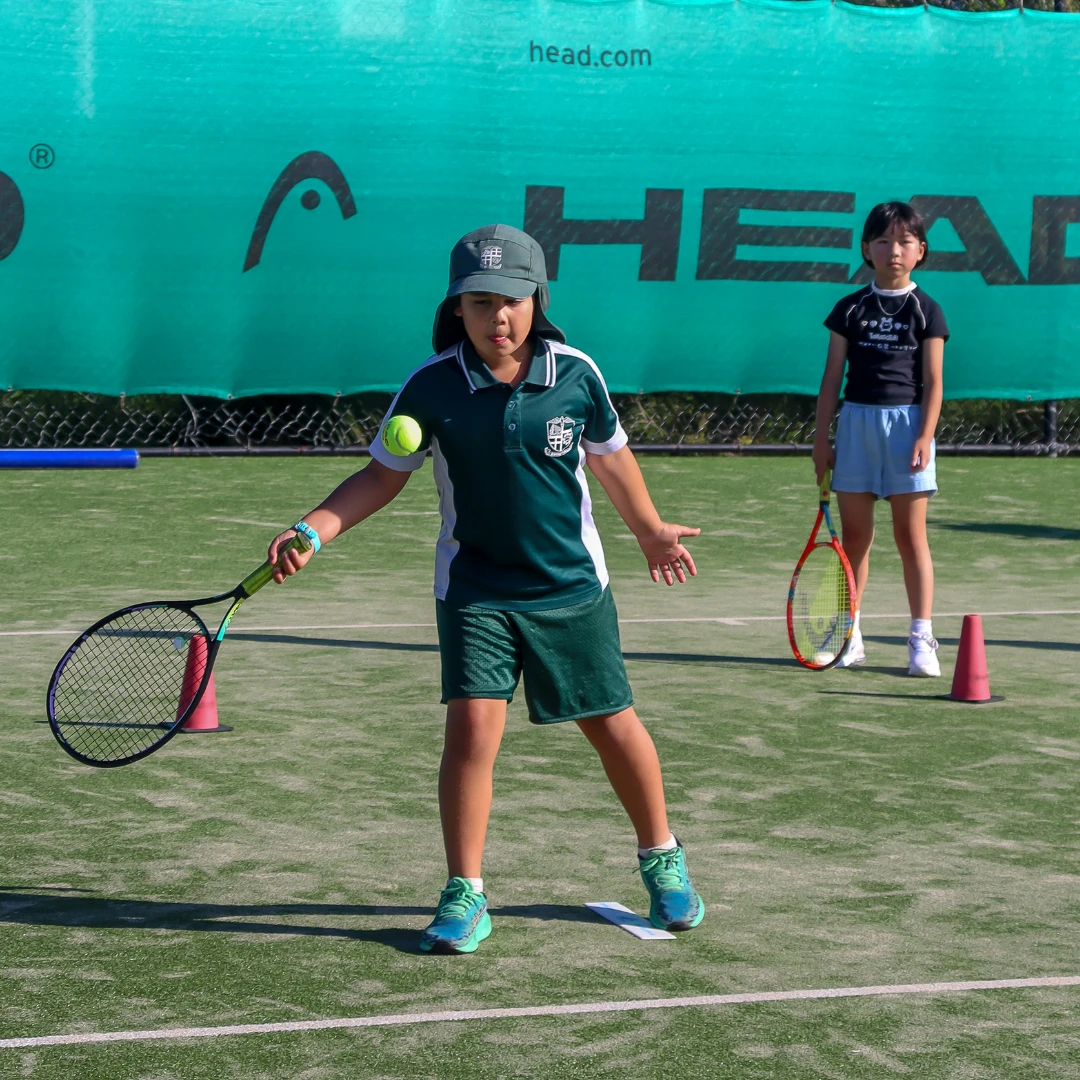
If you're getting ready for your child's first tennis lesson at Mutch Park and wondering what to buy beforehand, the short answer is: probably nothing. Most of what parents assume they need to source themselves (a properly sized racquet, the right balls, court-appropriate shoes) is either provided in the class or far simpler to sort out than gear guides make it sound. Here's what actually matters, in the order it actually matters.
The Short Answer: You Need Less Than You Think
For Hot Shots classes at Mutch Park, racquets and balls are provided as part of the program, scaled to each stage from Kinder through Yellow. You don't need to buy a racquet before a first or trial lesson. The two things worth sorting out in advance are proper court shoes and sun protection, both of which are about your child's comfort and safety rather than tennis-specific gear.
If you decide later that your child wants their own racquet for practice at home, or you're weighing up whether to buy one before enrolling, the sections below cover how to choose one properly rather than guessing.
Choosing the Right Racquet (If and When You Need One)
Tennis Australia's own guidance on junior racquets keeps it simple: a racquet fits if your child can hold it comfortably with their arm extended and swing it easily, and grip size matters more than most parents expect.1 A grip that's too big forces a child to squeeze harder to control the racquet, which increases injury risk and gets in the way of developing a fluent, relaxed swing.1 The practical test is simple: have your child hold the racquet out at arm's length. If it feels heavy or awkward within a few seconds, it's too big.
As a general starting reference (not a hard rule), USTA guidance suggests racquet lengths of roughly 19 to 20 inches for ages 3 to 5, 21 to 23 inches for ages 6 to 8, 24 to 25 inches for ages 9 to 10, and 26 inches or longer from around 11 onward.2 That lines up reasonably closely with how Hot Shots stages are structured, though age is only ever a starting guide: a tall, confident six-year-old might be ready for a slightly longer racquet than the chart suggests, and that's fine. The arm-extended test matters more than the number.
| Typical age | Approx. racquet length | Hot Shots stage |
|---|---|---|
| 3–5 years | 19–20 inches | Kinder / Launch Pad |
| 6–8 years | 21–23 inches | Red |
| 9–10 years | 24–25 inches | Orange / Green |
| 11+ years | 26 inches or longer | Yellow |
For a full breakdown of what each Hot Shots stage actually involves (not just the equipment), our age-stage guide covers the full progression from Kinder through Yellow.
Balls: Why They're Not All the Same
One detail that surprises a lot of parents: kids' tennis doesn't use standard yellow balls until much later. Balls scale in size, compression and bounce alongside racquet length and court size, so younger players aren't fighting a ball that moves too fast for their reaction time to track.2 Broadly:
- Red foam balls for the youngest players (roughly 3 to 5), the largest and softest option, bouncing low and slow.
- Red balls for early Red-stage players on a smaller court, still noticeably slower and lower-bouncing than the next stage up.
- Orange balls for the next stage, with a bit more compression and a slightly bigger court.
- Green (dot) balls as the transition step onto a full-sized court, with bounce closer to a standard ball but still reduced.
- Yellow balls for the full-sized game, once a player has progressed through the earlier stages.
This is exactly why a five-year-old struggling with a standard yellow ball isn't a sign they're "not good at tennis": they're using equipment built for a much later stage. It's also entirely provided as part of Hot Shots at Mutch Park, so it's not something parents need to source.
Shoes: What Actually Counts as "Tennis Shoes"
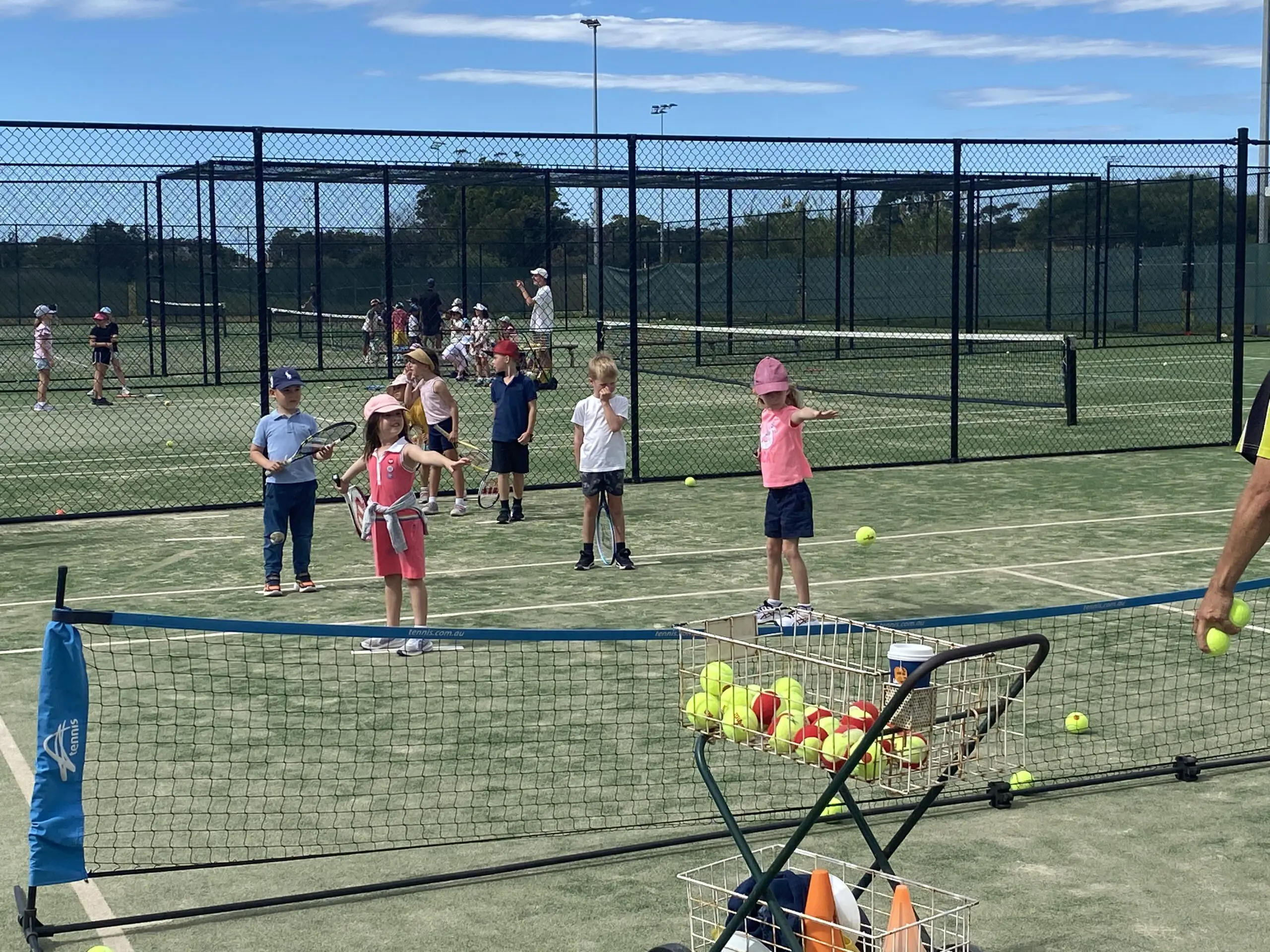
This is the one piece of gear worth genuinely sorting out before a first lesson, and it's simpler than it sounds. Tennis courts generally require non-marking soles: flat, relatively soft soles without cleats or deep tread, so they don't scuff or damage the court surface. Regular running shoes, football boots or anything with a hard or heavily textured sole isn't appropriate, and can also be genuinely worse for the quick side-to-side movement tennis involves.
A rough way to check a shoe at home: press a fingernail into the sole. If it dents easily, it's likely fine. If you want to be more certain, rub the sole across a sheet of white paper; if it leaves a scuff mark, it's not court-appropriate. Any enclosed athletic shoe with a flat, non-marking sole is generally fine for a first lesson; a dedicated tennis or court shoe is worth it once your child is playing regularly, mainly for support during lateral movement rather than the surface itself.
Clothing and Sun Protection
Tennis at Mutch Park is played outdoors, so sun protection matters more here than in most other kids' activities, and it's worth taking seriously rather than treating as an afterthought. Cancer Council Australia's SunSmart guidance for sports groups recommends broad-spectrum, water-resistant SPF50 or 50+ sunscreen, applied before the session and reapplied if it runs long, along with a hat that shades the face, neck and ears, and UV-protective sunglasses where practical during play.3 Comfortable, breathable activewear that covers as much skin as reasonably possible for an active session works well; anything heavy or restrictive will just make a child hotter and less willing to move freely.
Bring a water bottle regardless of the weather. Kids dehydrate faster than adults during active outdoor play and often don't recognise or mention thirst on their own, so it's worth prompting during any break in the session rather than waiting for them to ask.
What to Bring to the First Lesson
- ✓Enclosed shoes with a flat, non-marking sole (any athletic shoe is fine to start)
- ✓A hat that shades the face, neck and ears
- ✓Broad-spectrum SPF50+ sunscreen, applied before arrival
- ✓A water bottle
- ✓Comfortable, breathable activewear appropriate for running and swinging a racquet
- ✓Their own racquet, only if they already have one that passes the arm-extended fit test; otherwise one will be provided
That's genuinely the full list. Nothing else needs to be bought, booked or organised before your child's first session.
Common Mistakes Parents Make When Gearing Up
- 1Buying a racquet before the first lesson "just in case": it's provided in class, and buying before you know your child's actual fit and interest level often means buying the wrong size or a racquet that goes unused.
- 2Treating sun protection as optional for a "quick" lesson: even a 30 to 45 minute session in Sydney sun adds up over a term, and it's far easier to build the sunscreen-and-hat habit from week one than to retrofit it later.
- 3Showing up in regular running shoes: they're not built for the lateral movement tennis demands and can mark some court surfaces, which usually means a coach has to ask a child to sit out or borrow shoes on the day.
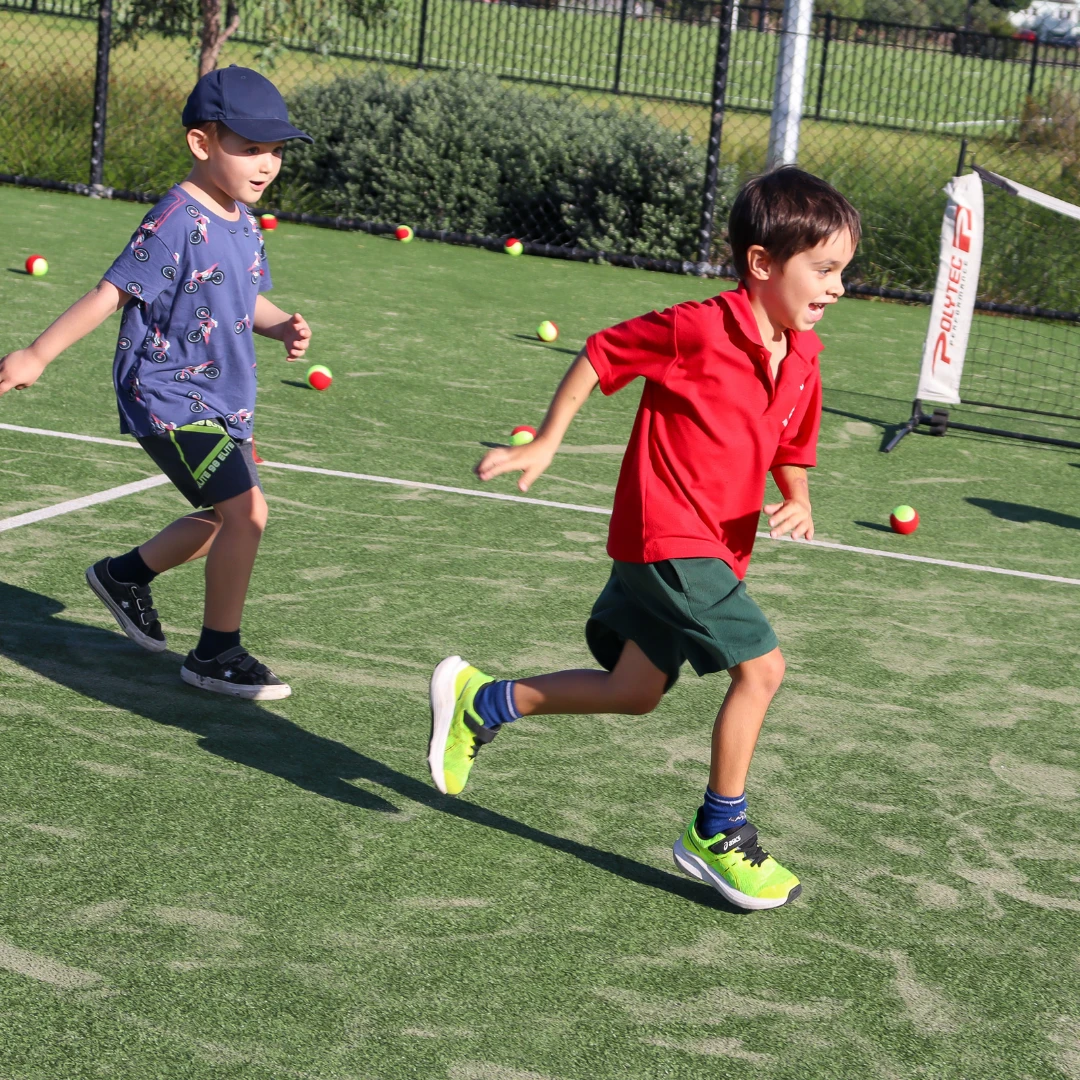
- 4Overbuying "proper" tennis kit for a three or four-year-old: at the Kinder and Launch Pad stages the session is closer to structured play than formal coaching, so comfortable everyday activewear does the job just as well as dedicated tennis apparel.
What We've Seen Coaching Kids at Every Stage
In practice, the gear question that comes up most at Mutch Park isn't racquets, it's shoes and sun protection, mostly because parents assume the racquet is the hard part and it's actually the part we've already solved for them. We typically see kids settle into a session much faster when they're comfortable (properly fitted shoes, a hat they'll actually keep on, sunscreen applied before they arrive) than when they're distracted by a too-heavy racquet borrowed from an older sibling. If in doubt about anything on this list, our coaches are always happy to check a child's setup on the day rather than have a parent guess in advance.
FAQs
Do I need to buy a racquet before my child's first tennis lesson?+
No. Hot Shots at Mutch Park provides age-appropriate racquets and balls for every stage from Kinder through Yellow. You only need your own racquet if your child is playing regularly outside of lessons.
What size racquet does my child need?+
As a general guide, roughly 19 to 20 inches for ages 3 to 5, 21 to 23 inches for ages 6 to 8, 24 to 25 inches for ages 9 to 10, and 26 inches or longer from around 11. The more reliable test is having them hold the racquet at arm's length; if it's comfortable to hold and swing, it fits.
What shoes are okay for kids' tennis?+
Any enclosed athletic shoe with a flat, non-marking sole (no cleats, no heavily textured tread) is fine to start. A dedicated tennis or court shoe becomes worth it once your child is playing regularly, mainly for lateral support.
Can my child wear running shoes to tennis?+
Not ideally. Running shoes are built for forward motion, not the quick side-to-side movement tennis requires, and some soles can mark certain court surfaces. Any flat-soled athletic shoe is a better substitute if a dedicated tennis shoe isn't available yet.
Why do kids use different coloured tennis balls?+
Red foam, red, orange, green and yellow balls scale in size, compression and bounce speed to match a child's stage, so younger or newer players aren't trying to track a ball that moves too fast for their reaction time. It's a deliberate part of the Hot Shots framework, not a lesser version of "real" tennis.
What should my child wear to tennis at Mutch Park?+
Comfortable, breathable activewear suitable for running and swinging a racquet, enclosed non-marking shoes, and a hat. Avoid anything heavy or restrictive that limits movement.
Is sunscreen really necessary for a short lesson?+
Yes. Even a 30 to 45 minute outdoor session adds up over a full term, and Cancer Council Australia's SunSmart guidance recommends broad-spectrum SPF50+ sunscreen for any outdoor sport, applied beforehand and reapplied for longer sessions.
Does my child need their own tennis bag or accessories?+
No. A water bottle and the items on the checklist above cover everything needed. Extra accessories like grip tape, overgrips or a dedicated tennis bag are only worth considering once a child is playing regularly outside of lessons.
What if my child doesn't have proper tennis shoes yet?+
Any enclosed, flat-soled athletic shoe is fine for a first lesson or two. It's more important that your child shows up and gives it a try than that every piece of gear is sorted perfectly in advance.
How much does it cost to get a child started in tennis at Mutch Park?+
Because racquets and balls are provided, the main cost is the program fee itself (structured by stage via weekly direct debit, with NSW Active Kids Vouchers applicable where eligible) plus whatever shoes and sun gear your child already has. Current pricing by stage is listed on the Hot Shots program page.
Next Steps
The easiest way to find out what your child actually needs is to bring them along to a free trial lesson: no need to buy anything first. Our coaches will check their setup on the day and let you know if anything's worth sorting out before their next session.
Sources: (1) Tennis Australia, general racquet fit and grip guidance, tennis.com.au/learn/rules-and-scoring/10-and-under-tennis-rules/racquets. (2) USTA Florida, junior racquet length by age and ball progression by stage, ustaflorida.com/youth-tennis/getting-started/. (3) Cancer Council Australia / SunSmart, sun protection policies for sports groups, sunsmart.com.au/advice-for/sports-groups/sun-protection-policies-for-sports-groups.