What Age Should Kids Start Tennis? A Parent's Guide to Every Stage
Most kids can start as early as three, provided the program is actually built for a three-year-old.
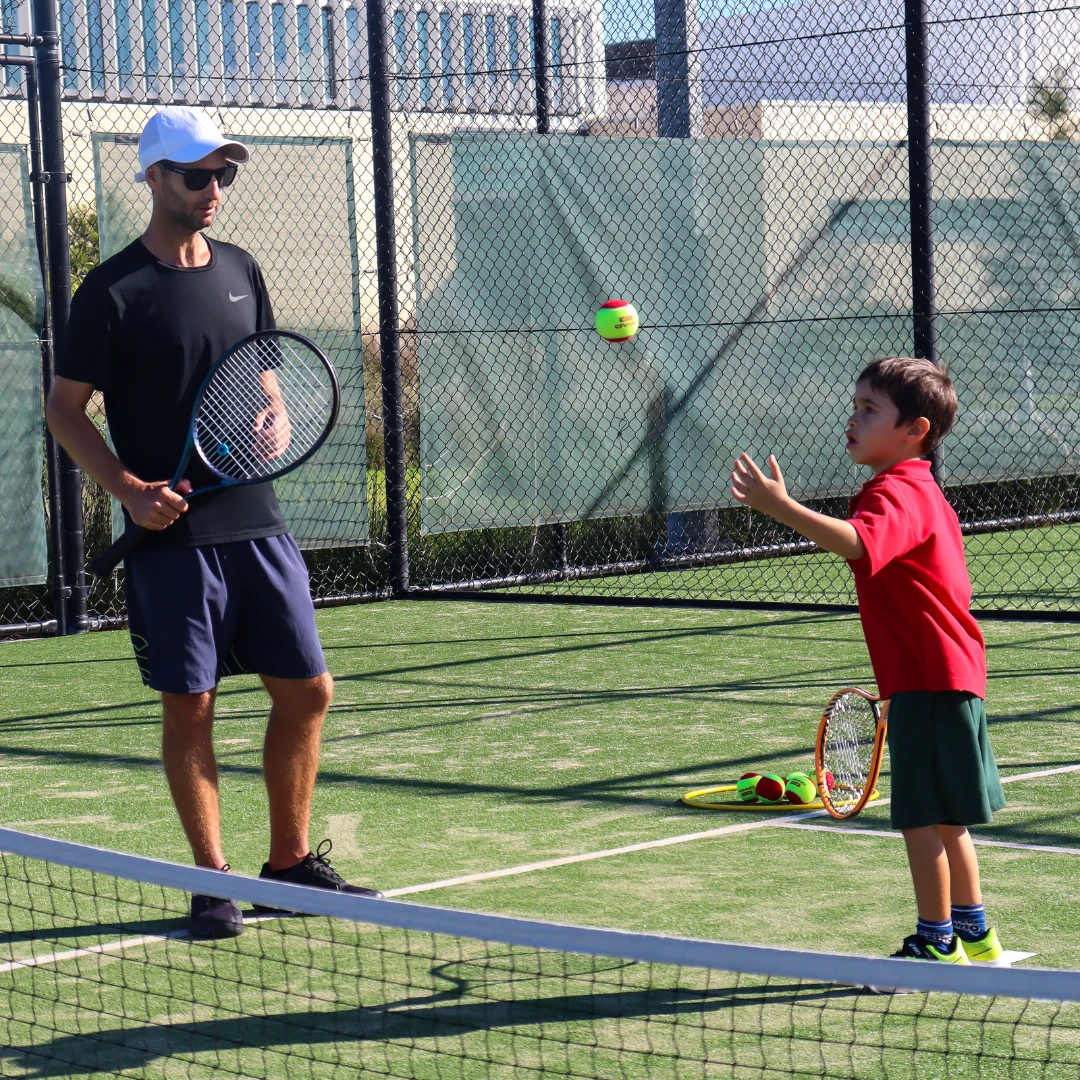
If you've been wondering what age kids can start tennis, you're not alone; it's one of the most common questions we hear from parents in Pagewood and across South Sydney. The short version: most kids can start as early as three years old, provided the program is built for their stage of development. But the honest, slightly longer answer is more useful, so let's walk through it properly.
The Short Answer: Most Kids Can Start From Age 3
Tennis Australia's official Hot Shots framework (the national junior pathway used at clubs across the country, including here at Mutch Park) starts at age three. The key word is modified: at three, four and five years old, kids aren't playing tennis the way adults do. They're using foam or low-compression balls, shorter racquets, and smaller courts, and the focus is entirely on movement, coordination and fun rather than technique or competition.
So the real answer to "what age should kids start tennis" isn't a single number: it's "as early as three, as long as the class is designed for a three-year-old and not a shrunken-down adult session."
Why Age 3 Works (When the Program Is Built for It)
This isn't just coaching folklore. The Australian Government's 24-Hour Movement Guidelines for the Early Years recommend that toddlers (1–2 years) get at least three hours of varied physical activity a day, and that preschoolers (3–5 years) get at least three hours daily including a full hour of energetic play: running, jumping, throwing, kicking, dancing.1 A well-run Hot Shots-style class ticks almost all of those boxes at once, wrapped in a format that also teaches hand-eye coordination and social skills like turn-taking and listening to a coach.
The caveat matters, though. The American Academy of Pediatrics notes that children aged two to five generally have limited balance, a short attention span, and vision that isn't yet fully mature for tracking fast-moving objects, which is exactly why organised competitive sport isn't recommended at this age.2 That's not a contradiction of the "start at 3" advice; it's the reason Hot Shots' youngest stage is deliberately non-competitive, play-based, and short in duration. Age 3 works for tennis because the good programs are built around what a three-year-old's body and brain can actually do, not despite it.
Tennis Australia's Hot Shots Age Stages, Explained
Hot Shots is structured in stages, with equipment (racquet size, ball compression, court size) scaled to age and ability rather than a strict birthday cut-off. Here's how it breaks down, including how we run it at Mutch Park:
| Stage | Typical age | What it focuses on |
|---|---|---|
| Kinder | Entry tier within the 3–5 year band | First-ever introduction: basic movement, holding a racquet, first contact with a ball |
| Launch Pad (Blue) | 3–5 years | Building on Kinder: coordination, social skills, more consistent racquet contact |
| Red | 5–8 years | Simple rallying, basic tactics, game-based activities on a smaller court |
| Orange / Green | 8–10 years | More structured tactics, singles and doubles, bigger court and ball |
| Yellow (Beginner+) | 11+ years | Full-size court skills, pathway into squads or junior competition |
Every child moves through these stages at their own pace: a confident five-year-old might progress faster than a cautious eight-year-old just starting out, and that's completely normal. Coaches assess and adjust each term rather than locking kids into an age bracket regardless of how they're tracking.
Signs Your Child Is Actually Ready (Not Just a Certain Birthday)
Age is a starting guide, not a rule. Before booking a first lesson, it's worth checking for a few practical signs of readiness rather than going by the calendar alone:
- ✓They can follow a simple two-step instruction ("pick up the ball, then throw it to me")
- ✓They can stand still and wait for a short turn without needing constant redirection
- ✓They show interest in balls, bats, racquets or chasing/throwing games generally
- ✓They can separate from a parent for 30–45 minutes in a group setting (or you're comfortable staying courtside for their first few sessions)
- ✓They're physically comfortable running, stopping and changing direction (most three-year-olds are)
If most of these sound like your child, they're likely ready for an introductory class. If not, that's fine too: free play, park visits and casual hitting against a wall are excellent groundwork, and there's no downside to starting six or twelve months later.
What We've Seen Coaching Kids at Every Age
In practice, our coaching team typically sees two things trip parents up around timing. First, some hold off far longer than necessary because they're picturing a "real" tennis lesson (serves, scorekeeping, standing in one spot) rather than the movement-and-fun format Hot Shots actually uses at the youngest stage. Once parents watch a Kinder/Blue session and see it's closer to structured play than formal coaching, that hesitation usually disappears fast.
Second, we typically see kids who start a little later (six, seven, even nine or ten) catch up on the tennis-specific skills quickly, provided they've had a reasonable amount of general active play beforehand (running, ball games, swimming, anything that builds coordination). Tennis rewards good all-round movement more than it rewards a head start of a year or two. So while three is a great age to begin, it's not a hard deadline your child needs to hit to enjoy or succeed at the sport later.
Starting Late: Is There Such a Thing as "Too Old" to Begin?
Not really. Certainly not within the primary-school years, and honestly not much beyond that either. Kids who start at eight, nine or ten typically move through the Orange and Green stages faster than younger beginners simply because their coordination, balance and attention span are more developed, even though they're newer to the racquet itself. If your child is starting later than their classmates, our private lessons are a popular way to build confidence one-on-one before joining a group class, so they're not starting from a visibly different point to kids who've been playing for a year or two.
Common Mistakes Parents Make When Timing a Child's First Lesson
- 1Waiting for "proper" readiness that looks like an adult's: you're looking for the signs above, not the ability to rally ten shots in a row.
- 2Judging progress against age instead of stage: a seven-year-old who started this term and a seven-year-old who started at three will be in different groups, and that's the system working correctly, not a red flag.
- 3Skipping the modified equipment stages: starting a young child straight on a full court with a standard ball is more likely to create frustration than skill; it's genuinely harder to hit, not just less "proper."
- 4Treating the first class as a test: the first lesson is for the coach to see where your child's at, not a pass/fail moment. A quiet or shy first session is completely normal and rarely predicts how a child settles in by week three or four.
How to Choose the Right First Program
Look for three things regardless of which club you choose: age-appropriate equipment (smaller racquets, softer/slower balls for younger stages), a class size small enough for real individual attention, and a coach who's used to working with the specific age group you're enrolling: coaching a confident group of nine-year-olds and coaching a room of shy three-year-olds are genuinely different skills. If your child is turning three to five this year, our Hot Shots program is the natural starting point. If they're a little older and starting from scratch, ask about private lessons first. School holidays are also a low-commitment way to trial it: our school holiday tennis camps run kids through a full week of tennis without a term-long sign-up.
FAQs
What age can kids start tennis lessons?+
Most kids can start from around age three in a modified, play-based program like Hot Shots. There's no fixed minimum age; it depends more on the signs of readiness than the calendar.
Is 3 years old too young to start tennis?+
No, as long as the class is designed for three-year-olds specifically: shorter sessions, foam or low-compression balls, small racquets, and a focus on movement and fun rather than technique or competition.
What is Hot Shots and how does it relate to age?+
Hot Shots is Tennis Australia's official national framework for junior tennis, structured in age-linked stages (roughly 3–5, 5–8, 8–10, and 10+) with equipment scaled to each stage rather than a single format for all ages.
Do toddlers need their own racquet to start lessons?+
No. Programs like Hot Shots provide appropriately sized racquets and equipment for the youngest stages. You don't need to buy anything before a first or trial lesson.
How do I know if my child is ready for their first tennis lesson?+
Look for the ability to follow simple two-step instructions, wait briefly for a turn, separate from a parent for the length of a short class (or be happy with you courtside), and general interest in ball or chasing games.
What if my child is 8, 9 or 10 and has never played tennis?+
That's a completely normal starting point. Older beginners often progress through the early stages faster than younger kids because their coordination and attention span are more developed; private lessons are a popular way to build confidence before joining a group.
How long are kids' tennis lessons at each age?+
Younger stages (Kinder/Blue) typically run shorter sessions given attention spans, while older stages run closer to a standard hour. Exact session lengths and current term times are listed on the program page.
Does starting tennis young help with a child's development beyond the sport itself?+
It can support general physical literacy (coordination, balance, following instructions, social turn-taking) alongside the recommended daily activity levels for preschoolers set out in the Australian Government's movement guidelines for under-5s.
What should my child wear or bring to their first lesson?+
Comfortable enclosed shoes, weather-appropriate activewear, a water bottle, and sun protection for outdoor sessions. Racquets and balls are provided for the younger stages.
How much do kids tennis lessons cost at Mutch Park?+
Pricing is structured by stage via weekly direct debit, and NSW Active Kids Vouchers can be applied where eligible. Current pricing by stage is listed on the Hot Shots program page.
Next Steps
The easiest way to find out if your child's ready is to bring them along and see how they go: no need to have every sign of "readiness" locked in first. Book a free trial lesson with our Hot Shots team at Mutch Park in Pagewood and we'll place your child in the right stage from their very first session.
Sources: 1 Australian Government Department of Health, 24-Hour Movement Guidelines for the Early Years (Birth to 5 years). 2 HealthyChildren.org (American Academy of Pediatrics), Is Your Child Ready for Sports?. Program framework: Tennis Australia, About Hot Shots Tennis.