Is Tennis Good for Child Development? A Coach's Honest Look at the Evidence
Short answer: yes, across three areas. Here's what the evidence actually says, including where it's mixed.
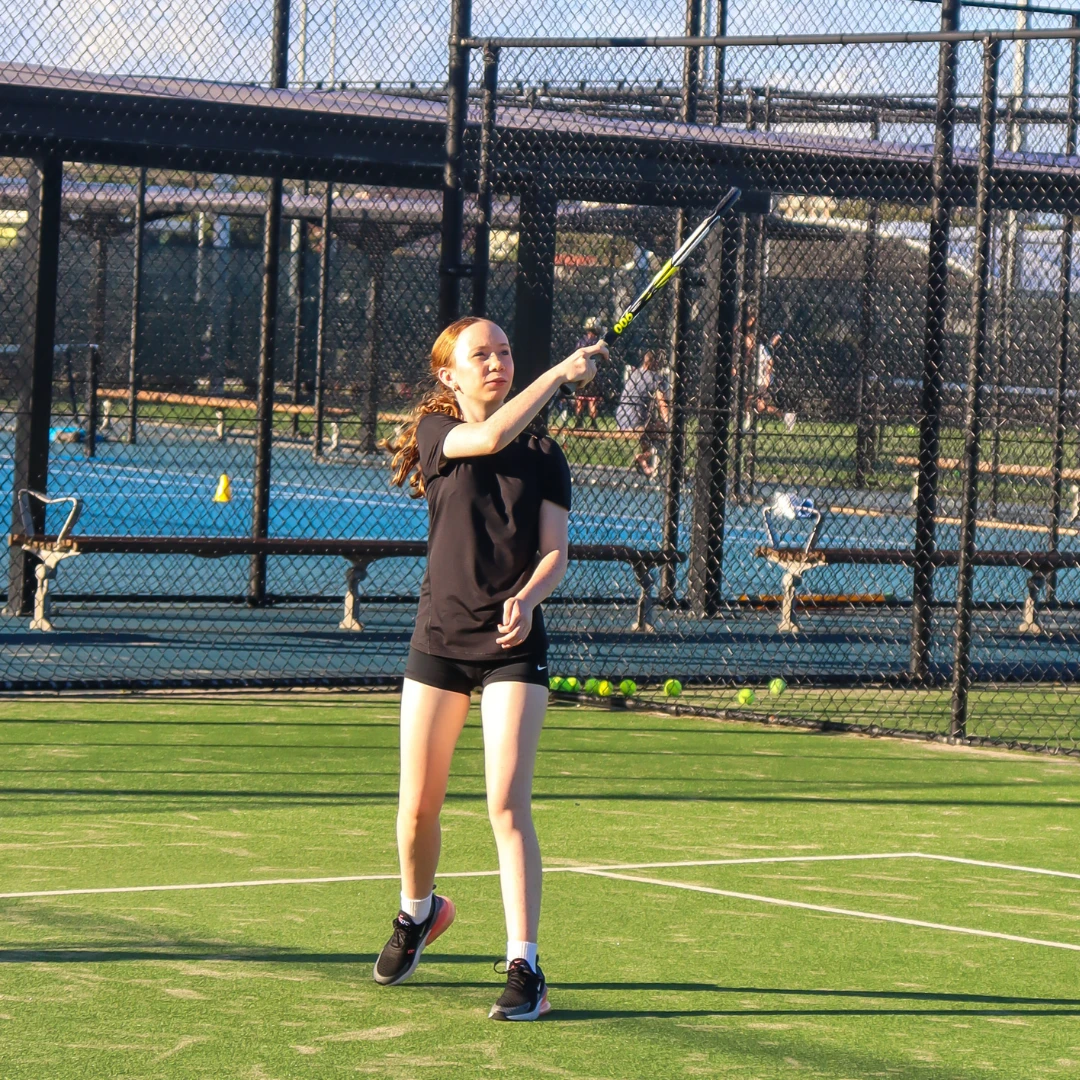
Short answer: yes, and not just in the vague "sport is good for you" sense. Tennis has a genuinely well-documented developmental profile across three areas: physical (coordination, fitness, motor skills), cognitive (focus, decision-making, problem-solving), and social-emotional (confidence, resilience, connection). Here's what the evidence actually says, where it's mixed rather than perfect, and what we typically see coaching kids through it at Mutch Park.
The Short Answer: Yes, Across Three Areas of Development
Tennis Australia's own developmental framework groups the benefits into physical, mental, and social categories, and that's a genuinely useful way to think about it rather than a marketing simplification.1 Unlike some sports that mostly develop one thing well (running builds cardiovascular fitness; chess builds strategic thinking), tennis sits at an unusual intersection: it demands hand-eye coordination and footwork and in-the-moment decision-making and the emotional regulation to keep playing after a bad point. That combination is why it shows up so consistently across all three development categories rather than dominating just one.
Physical Development: Coordination, Fitness and Motor Skills
The physical case is the most straightforward. Tennis develops hand-eye coordination and both gross motor control (court movement, ball striking) and fine motor control (grip, racquet handling), alongside balance, acceleration, agility and flexibility.1 For growing kids, that's a genuinely broad movement stimulus in one activity, more varied than many single-skill sports.
It's also a real aerobic workout dressed up as a game: rallying, changing direction and covering the court raises heart rate and builds cardiovascular fitness without the session feeling like "exercise" to a child, which matters for keeping kids engaged long enough to get the benefit in the first place.2
Cognitive Development: What the Research Actually Shows
This is where it's worth being precise rather than just asserting "tennis makes kids smarter." A 2022 peer-reviewed study published in Frontiers in Human Neuroscience compared children aged 8–12 with under 12 months of tennis training against those with over 12 months, using computerised tests of three executive function components: inhibitory control, working memory, and cognitive flexibility.3
The longer-trained group showed significantly faster reaction times on both the working memory test and the cognitive flexibility (task-switching) test: the kind of split-second "read the situation and adjust" thinking tennis constantly demands mid-rally. Notably, the study found no significant difference in inhibitory control between the two groups, so it's not accurate to claim tennis improves every cognitive function uniformly. The honest takeaway: longer-term tennis training is associated with measurable gains in some executive function areas, not a blanket cognitive upgrade.
That lines up with what coaches see anecdotally: tennis forces constant tactical micro-decisions (where to hit, when to change strategy, how to respond to an opponent's pattern) in a way that few other kids' activities do at the same pace.
Social and Emotional Development: Confidence, Resilience and Connection
Tennis is often assumed to be a solitary sport, but the social and emotional case is arguably its strongest. According to Dr. Larry Lauer, a mental skills specialist with the USTA (the US governing body for tennis), the sport counters isolation by giving kids "a fun, competitive experience with someone else," builds self-confidence as skills develop, and, because it inherently involves losing points and matches, teaches kids to manage their emotions and "bounce back" from setbacks when the focus stays on improvement rather than just winning.4
Tennis Australia's framework echoes this: playing develops a child's capacity to take responsibility for their own mistakes, adapt to different situations, and handle the frustration of a tough match, while doubles specifically builds teamwork and singles builds pre- and post-match communication skills with opponents.1 It's a useful correction to the "individual sport = no social skills" assumption: the social learning just looks different from a team sport.
What We've Seen Coaching Kids Through Tennis
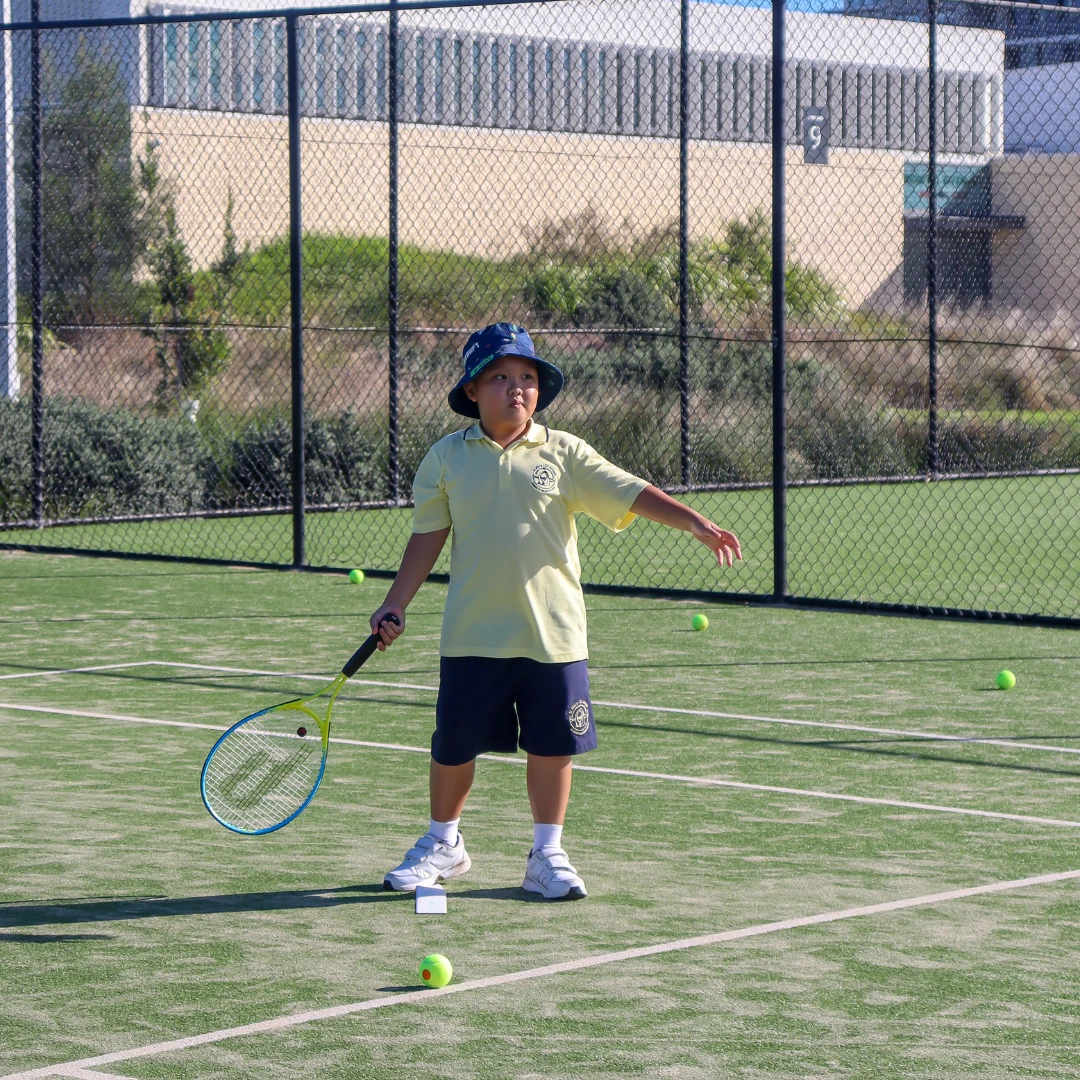
In practice, our coaching team typically sees the resilience piece show up before parents expect it. A child who melts down after missing an easy shot in week two is often, by week eight or ten, shrugging off the same miss and refocusing on the next point, not because we've given them a pep talk, but because tennis puts a child in that exact "miss and recover" loop dozens of times per session, which is a lot of low-stakes practice at handling disappointment.
We also typically see the physical and cognitive benefits reinforce each other rather than developing separately: a child who's more coordinated generally reacts faster to where the ball is going, which naturally strengthens the same tactical decision-making the research points to. It's rarely one clean, isolated benefit; the areas tend to build on each other.
Does My Child Need to Be "Good at Sport" to Get These Benefits?
No, and this is worth saying plainly, because it's the single biggest reason parents hold kids back from trying. The developmental benefits above come from participation and repetition, not from being naturally talented or winning matches. A child who's never held a racquet gets the same coordination stimulus, the same tactical decision-making practice, and the same "miss and recover" resilience loop as a naturally athletic child; they just start from a different baseline. Coaches scale the activity (modified balls, smaller courts, simpler tactics) specifically so the benefits are accessible regardless of starting ability.
How Age Affects Which Benefits Show Up First
Younger kids (toddlers through early primary) tend to get the physical and foundational-coordination benefits first and most visibly: that's the whole premise behind entry-level, movement-focused classes.5 The cognitive and tactical benefits become more pronounced as kids get old enough to hold and apply strategy (roughly from the Red stage onward, 5–8 years and up), which is also when the 2022 executive-function research sampled its 8–12-year-old participants.3 The social-emotional benefits (confidence, resilience, handling competition) build gradually across all ages but tend to become most visible once a child starts playing matches or informal competitive games rather than pure drills. If you're weighing up when to start based on which benefits matter most to you, our full age-stage guide breaks down what's realistic at each stage, and our toddler-specific guide covers the youngest end of that range in more depth.
Common Mistakes That Undercut the Developmental Benefits
- 1Making winning the point of every session. The resilience and confidence benefits come from a focus on improvement, not results; a child pushed to win every point gets less of the "bounce back" benefit, not more.
- 2Specialising too early, at the expense of general movement. Pediatric guidance generally advises against intensive single-sport specialisation and year-round training for young kids, in favour of broad-based physical activity; tennis is a great contributor to that mix, not a replacement for all-round active play.
- 3Skipping the fundamentals stage to "keep up" with older kids. Rushing a child onto adult-format tennis before they've built the underlying coordination reduces the physical benefit and adds unnecessary frustration.
- 4Assuming benefits require natural talent. As above: participation drives the benefit, not ability. Holding a child back because they're "not sporty" removes the exact activity likely to help with that.
Getting Started
The lowest-friction way to see these benefits firsthand is a single trial session rather than committing to a full term upfront. Private lessons are a good way to build the fundamentals one-on-one before joining a group class.
FAQs
Is tennis good for a child's development?+
Yes, it's one of the few sports with well-documented benefits across physical (coordination, fitness), cognitive (decision-making, focus), and social-emotional (confidence, resilience) development simultaneously.
Does tennis actually improve kids' concentration or focus?+
Research on tennis training and executive function found measurable improvements in cognitive flexibility and working memory in longer-term junior players, though not in inhibitory control specifically: the picture is positive but not uniform across every type of focus-related skill.
Is tennis a good sport for shy or less athletic kids?+
Yes. The developmental benefits come from participation and repetition, not natural talent or winning, and classes are scaled to a child's current ability rather than assuming a baseline skill level.
Does tennis help with a child's confidence?+
Yes, building skills over time and learning to recover from mistakes (missed shots, lost points) are both directly linked to improved self-confidence and resilience in youth players.
Is tennis a good social activity, or is it too individual?+
It's more social than it looks. Doubles builds direct teamwork, and singles still involves pre- and post-match interaction with opponents plus the shared experience of group classes; most kids' tennis happens in a class setting, not isolated one-on-one hitting.
What physical skills does tennis develop in kids?+
Hand-eye coordination, gross and fine motor control, balance, agility, flexibility, and general cardiovascular fitness through match and rally movement.
At what age do the cognitive benefits of tennis start to show?+
Foundational coordination benefits appear from the youngest stages, while more complex tactical decision-making benefits become more pronounced as kids get old enough to apply real strategy, generally from around five to eight years and up.
Can tennis help with a child's emotional regulation?+
Tennis repeatedly puts kids in "miss a shot, then respond" situations within a single session, which, especially when coaches keep the focus on improvement rather than winning, gives repeated, low-stakes practice at managing frustration and bouncing back.
Is one sport (like tennis) enough, or should kids play multiple sports?+
General pediatric guidance favours a mix of activities over early single-sport specialisation for young children; tennis is a strong contributor to that mix rather than a sole replacement for broad-based physical activity.
How do I know if my child is getting these benefits from their classes?+
Look for a program that scales equipment and format to age and ability (not a one-size-fits-all adult format), keeps the coaching focus on improvement rather than only results, and gives kids enough repetition within a session to actually practise recovering from mistakes.
Next Steps
The easiest way to see whether tennis clicks for your child is a trial session, not a term-long commitment. Book a free trial lesson with our Hot Shots team at Mutch Park in Pagewood.
Sources: 1 Tennis Australia, Developmental Benefits for Children. 2 Better Health Channel (Victorian Government), Tennis Health Benefits. 3 Frontiers in Human Neuroscience (2022), Association between tennis training experience and executive function in children aged 8–12. 4 USTA, Mental Health Benefits of Tennis for Children and Teens.